
Homebirths, hot tubs, and PPD
Postpartum depression, and one treatment in particular - a new drug called Zurzuvae - have been in the news, as actress Jennifer Lawrence recently spoke publicly about her postpartum experience. It's both common and often under-diagnosed, so here’s what the evidence shows on navigating PPD.
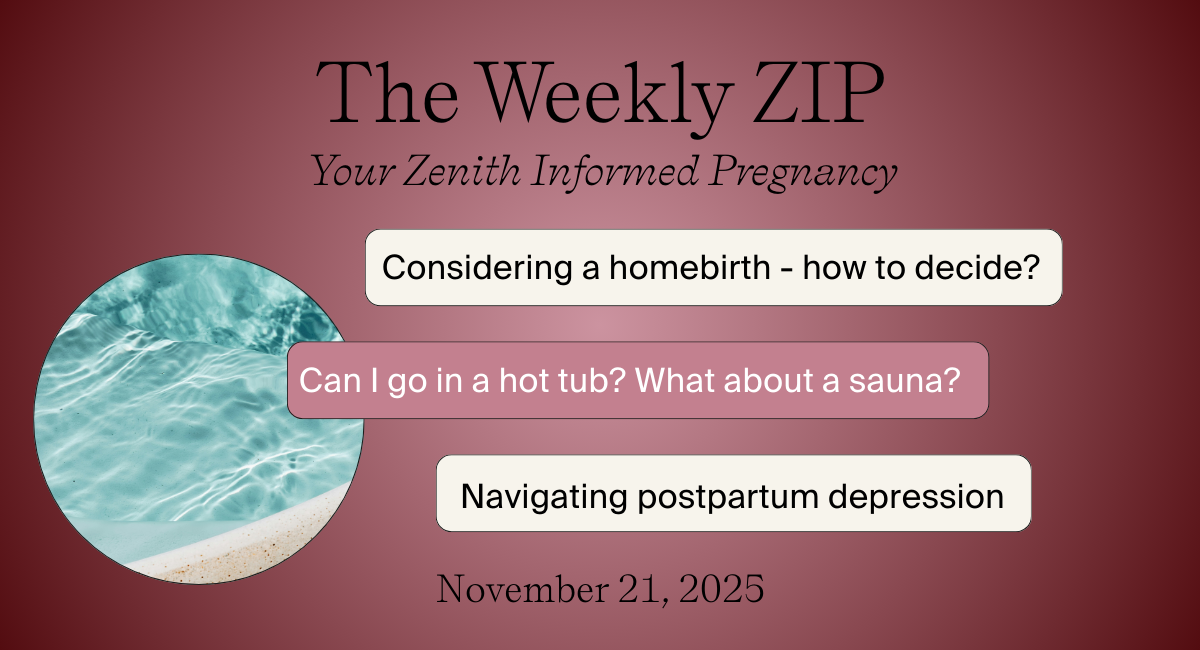
Welcome to the weekly ZIP - your Zenith Informed Pregnancy!
Read on for a quick zip through 3 of the week’s most popular pregnancy questions, and the evidence behind them. Plus - bonus content on the latest & greatest in the world of pregnancy research.
This week's top pregnancy questions:
1️⃣ Considering a homebirth - how to decide?
2️⃣ Can I go in a hot tub? What about a sauna?
3️⃣ How to know if I’m experiencing postpartum depression, and what can I do about it?
Considering a homebirth - how to decide?
Last week, we highlighted the important role community midwifery plays, and the rising rates of homebirth in the US. Homebirths can be a fairly controversial practice - with both staunch advocates and critics. There are many reasons someone might be considering one - from personal beliefs in physiological birth and personal autonomy during labor and birth, to prior negative hospital experiences, cultural reasons, or comfort and environment.
📚The tl;dr from the evidence: Data demonstrates that homebirth can be as safe as hospital birth for low-risk pregnancies, but context and planning matters a lot. Pregnancies with existing risk factors or complications (ranging from ongoing medical conditions, carrying twins, preterm labor, prior C-sections, or even baby’s position) come with strong recommendations for a hospital birth, as hospitals are equipped to rapidly intervene in urgent situations such as heavy bleeding, newborn resuscitation, or emergency c-section.
Some studies have found a very slightly higher risk in homebirths vs hospital births, and organizations like ACOG still recommend hospitals or accredited birthing centers as the safest places to give birth, but lots of high quality research finds similar outcomes across home and hospital births with the proper planning and support model. It’s important to note that the evidence here is strongest in areas/nations where homebirthing and high quality midwifery support is integrated well into the healthcare system.
This data supports the strong need to create a detailed birth plan before a homebirth: most importantly, a skilled, certified midwife who can quickly and accurately identify any complications, and a transfer plan with quick access to a hospital, should an emergency occur. Additionally, planning can include reflections on your key priorities in wanting a homebirth - as many hospitals do support minimal-intervention birth plans, use of midwives and doulas, and comfort measures/laboring positions commonly associated with homebirths like water, movement, and access to support people. For some moms, this type of birth plan creates a path to honoring preferences while ensuring safety in the case of emergent complications.
👀 Read Penny’s full summary of the evidence for more on homebirths
Can I go in a hot tub? What about a sauna?
Colder weather brings a lot of questions from moms wondering if they can pop into the hot tub, or relax in the sauna, or even take a hot bath. Many of these activities come with cautions for pregnancy - so what is the science behind this, and what kinds of heat exposure are safer than others?
📚The tl;dr from the evidence: The primary consideration for hot tubs, saunas, and the like are raising your core body temperature. The evidence is fairly consistent, and is supported by a plausible biological mechanism (high body temperature affecting fetal development), although largely based on case-control and cohort studies, which have some shortcomings.
Research has suggested that high body temperature, above a certain threshold (around ~102°F), particularly in early pregnancy can be linked to an increased risk of neural tube defects – problems with the baby’s spine or brain development – as well as a small increase in miscarriage risk. While the absolute risk of defects is still very low (~1-2 in 1,000), data does indicate that it’s about a 1.5-2x higher risk for those who use hot tubs in early pregnancy.
Since the evidence is related to core temperatures, safer modifications include when the water is not too hot (below 100°F), exposures are brief (<10 minutes), and/or sitting on the edge and soaking just your feet/lower legs. Avoiding your core temperature rising is the key, as is avoiding any dehydration, dizziness or fainting – which are both more common in pregnancy, and signals for potential concern or discussion with your doctor.
👀 Read Penny’s full summary of the evidence for more on hot tubs and heat exposure
How to know if I’m experiencing postpartum depression, and what can I do about it?
Postpartum depression, and one treatment in particular - a new drug called Zurzuvae - have been making headlines recently. This comes as actress Jennifer Lawrence recently spoke publicly about her postpartum experience – and credited Zurzuvae (unsponsored!) helping her recovery. Postpartum depression is common (occurring in ~1 in 7 new moms) and often underdiagnosed in part due to shame, stigma, or not knowing what’s ‘normal’ in the postpartum period, so here’s what the evidence shows about identifying and treating PPD.
📚The tl;dr from the evidence: Postpartum depression (and other perinatal mental health conditions) are distinct from the common “baby blues,” which affect up to 80% of new parents but typically resolve within 1-2 weeks without any treatment. PPD is longer lasting (>2 weeks) and more intense than the baby blues, and interferes with your ability to function normally or care for yourself or your baby.
Some of the specific symptoms include persistent sadness or hopelessness, difficulty bonding with your baby, feeling guilty or worthless about not being a good parent, significant changes in sleep or appetite, trouble concentrating or loss of interest/pleasure, withdrawal from friends/family, and/or thoughts of harming yourself or your baby. If you’re experiencing thoughts of harm, please reach out for help right away: contact your provider, or if they are unavailable, call a mental health crisis support line or visit the ER.
Recognizing these signs and seeking support is a sign of strength, not failure or shame. PPD is very treatable, and there are multiple different types of safe and effective options – across therapy, different types of medications, and support groups.
Therapy (including individual and/or group based therapy) is highly effective as the first line of treatment, and medication is often considered in addition to talk therapy. Multiple kinds of medications are available, including selective serotonin reuptake inhibitors (SSRIs) which are commonly used antidepressants both during and outside of the perinatal period. Additionally, zuranolone (branded as Zurzuvae) is the first oral medication approved specifically for postpartum depression, and is taken by mouth for a 2 week period. Your doctor can work with you to find the course of care that is most appropriate and effective for your specific needs.
👀 Read Penny’s full summary of the evidence for more on navigating postpartum depression
🤓 Zenith's top read of the week
Bonus: what the Zenith team found interesting this week. Think cool pregnancy research or recently published studies, news in pregnancy health and policy, and more!
New Study Reveals Physiological Changes During Pregnancy Based on Oura Data (Emilina Lomas, Oura) - This new study, published in JMIR mHealth and Uhealth, uses data from Oura rings in 10,000 pregnancies to look at how several key biometrics change throughout the perinatal period. They uncovered a number of different insights, ranging across body temperature, sleep patterns, heart rate, activity levels, and even some early deviations in some metrics for women who experienced pregnancy loss – up to two weeks prior to loss. This both helps us establish what "typical" can look like, and identify areas of focus for future research.
It’s wonderful to see Oura data being used in this way, and that over 10,000 users consented to share their data and pregnancy outcomes to help researchers establish a better understanding of baseline pregnancy metrics! The findings here suggest that data from everyday wearable technology like Oura (or other smartwatches/wearable tech) could help identify signs of both healthy and abnormal pregnancies, helping moms to receive better and more proactive care. Hooray for the power of real world data!
Key excerpt:
“It may seem surprising, but this research is one of the few papers that even begins to describe what is considered normal for a pregnancy,” says Dr. Chris Curry, MD, PhD, Oura’s Clinical Director of Women’s Health. “What is exciting about this science is that once we establish and validate what a healthy baseline is, we can explore the patterns that may be linked to risk of diseases.”


