
Probiotics, epidural recovery, and shoveling snow
According to Google, the search term"Shoveling snow pregnant" is up +450% this week, and (unsurprisingly!) there are no studies specifically on snow shoveling. Here's what we can learn from other relevant evidence on whether moms should be out shoveling, or cozying up indoors!
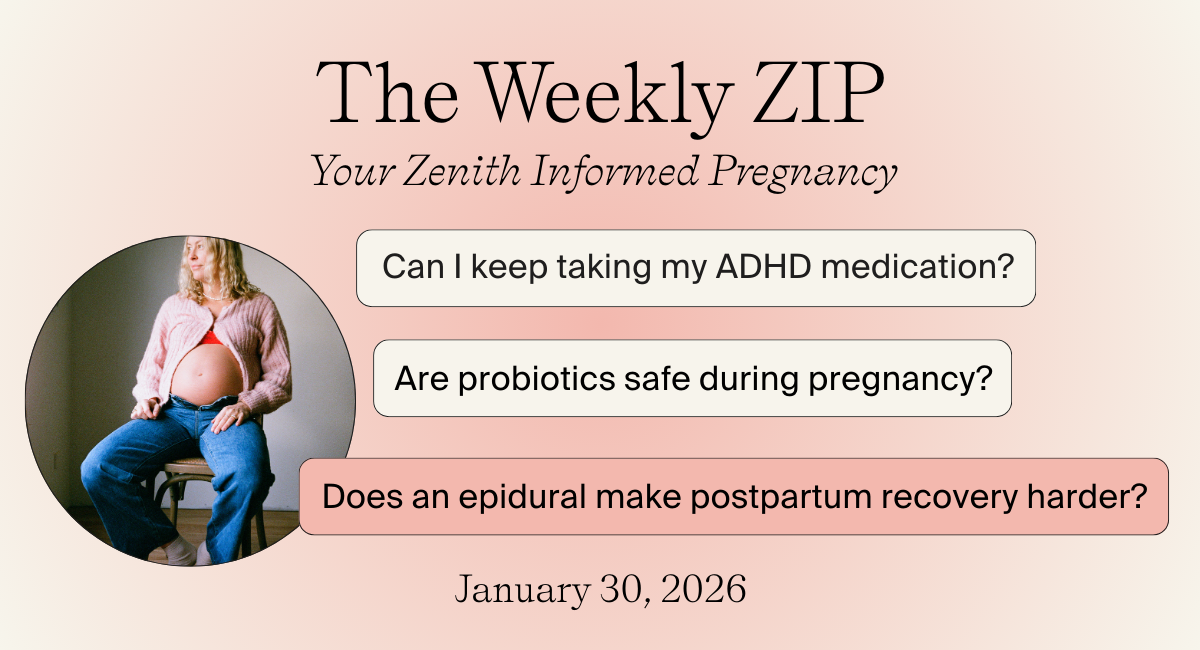
Welcome to the weekly ZIP - your Zenith Informed Pregnancy!
Read on for a quick zip through 3 of the week’s most popular pregnancy questions, and the evidence behind them. Plus - bonus content on the latest & greatest in the world of pregnancy research.
This week's top pregnancy questions:
1️⃣ Can I continue Vyvanse or Adderall during pregnancy?
2️⃣ Are probiotics safe during pregnancy?
3️⃣ Does an epidural make postpartum recovery harder?
☃️ Can I shovel snow while pregnant?
Can I continue Vyvanse or Adderall during pregnancy?
For moms who take ADHD medications like Vyvanse or Adderall, trying to conceive or finding out you’re pregnant can turn a long-standing treatment plan into a big question mark. With mixed advice online, sometimes non-advice from providers, and real concerns about functioning day-to-day without the medications, understanding the nuance in the data is important to make a choice that best fits your situation and goals.
📚The tl;dr from the evidence: There has not been a sufficient amount of research yet on ADHD medications, but the data we do have doesn’t indicate a significantly increased risk of core infant outcomes like major birth defects or neurodevelopmental disorders. There is some data showing a potentially increased risk for pregnancy complications, like preterm birth, low birth weight, or preeclampsia – while the risk is increased as compared to the baseline, the absolute risk for these complications is still low.
Most of the research to date has focused on stimulant ADHD medications (amphetamines, and methylphenidate - brands like Ritalin or Concerta) and has found a generally similar safety profile. Most brands are considered by the FDA as “Category C” during pregnancy, meaning that there are not sufficient well-controlled studies in humans to make a clear determination on safety.
In lieu of perfect research data proving safety or clear risks, today’s clinical guidelines focus on the severity of your ADHD symptoms, and suggest that if your symptoms are severe enough that your medication is really important for daily functioning, continuing medication at the lowest effective dose can be a reasonable option. Untreated/unmanaged ADHD can also carry risks, so this is a decision where moms are highly encouraged to work with their doctor to weigh the potential risks we see from the evidence alongside their personal circumstances, medical history, and preferences for the course of their pregnancy.
👀 Read Penny’s full summary of the evidence for more on ADHD medications
Are probiotics safe?
Probiotics, prebiotics - these are buzzy health and wellness terms, with countless new products promising improved gut health, microbiome improvements, and beyond. Prebiotic sodas, in particular - like Poppi or Olipop - have taken off in popularity, as a “healthier” option to regular soda. Penny fields a lot of questions about whether these drinks, and pre/probiotics in general, are safe or useful during pregnancy - so here’s the breakdown!
📚The tl;dr from the evidence: Probiotics are generally considered healthy and safe during pregnancy, although the evidence is not yet clear on to what extent they’re actually beneficial. There aren’t any studies on prebiotic sodas or drinks like Poppi specifically, but what we do know does not suggest any reason for concern on prebiotics – although some of these drinks may include other ingredients like herbal extracts or caffeine, so as always, checking the label and specific ingredients for the flavor you want is helpful.
As far as the benefits, more research is needed specifically focused on pregnant people (we know, we know… always more research needed!) – but the general benefits of probiotics around digestive improvements may be particularly suited to pregnancy, given that many GI symptoms (constipation, nausea/vomiting, etc) are quite common specifically during pregnancy.
While not entirely conclusive, some research has actually linked probiotics during pregnancy (particularly in the final month, and sometimes during breastfeeding as well) with beneficial infant health outcomes - like a lower risk of eczema or allergies, especially with a family history of these conditions. How would this work? Probiotics affect mom’s gut and vaginal microbiome, which in turn can influence the baby’s gut bacteria and immune system via this early exposure to “good” bacteria.
👀 Read Penny’s full summary of the evidence for more on probiotics & prebiotics
Does an epidural make postpartum recovery harder?
Pain during birth often brings up a lot of fear and questions, especially for first-time moms. Planning for what type of pain management approach is best, without having experienced birth before, can be overwhelming - and there’s no shortage of anecdotal tales or common misconceptions about epidurals, the most commonly used medication for pain relief. Here’s the evidence behind one of those misconceptions - that an epidural can make recovery longer or more difficult.
📚The tl;dr from the evidence: Getting an epidural during childbirth should not make physical recovery harder, according to the evidence we have today. There’s no solid indication that an epidural would lead to worse physical or psychological recovery - and in fact, some research suggests that epidurals (and other effective forms of pain relief) might even lower the risk of postpartum depression or birth trauma, as a result of good pain management during labor.
An epidural is a type of anesthesia that numbs the lower half of your body, administered via your lower back, and allows you to stay awake/alert while reducing the pain from contractions and delivery. Due to the numbing, you won’t be able to walk during labor, and you may experience a temporary numbness or weakness in your legs - but these impacts are temporary, just until the medication wears off, and are generally resolved within just a few hours of birth.
Some worries about epidurals stem from concerns that it might slow down labor or cause longer-term back pain, but these claims are currently unsupported by research. These concerns might come from individual anecdotes/experiences, or be conflating common postpartum experiences (like back pain) with the epidural itself – as studies don’t show any difference in longer-term back pain for women who did / did not have an epidural.
👀 Read Penny’s full summary of the evidence for more on epidural recovery
And this week, an extra Q, since we’re all feeling it with the winter storms, snowfall, and snow days across the country –
❄️ Can I shovel snow while pregnant?
This search is up +450% this week, according to Google, and (unsurprisingly!) there are no studies specifically on snow shoveling, but the general guidance is to try to avoid it if you can. Shoveling can be fairly strenuous, especially in wet/heavy snow, and is considered a form of heavy lifting – likely with more repetitive twisting and unfamiliar motions compared to your fitness routine. Practically speaking, it can increase the risk of back pain and other aches/discomfort. Additionally, strenuous activity on the snow and ice comes with the risk of slipping/falling – which is more dangerous during pregnancy due to your balance already changing, and wanting to avoid falling on your baby bump.
It’s a good moment to accept an act of kindness from your spouse, a neighbor or a friend if someone can help out with clearing the snow - and cozy up indoors! If you absolutely must shovel or clear a small area, use a lightweight shovel, take breaks, wear shoes with excellent traction, and stop if you feel dizzy, short of breath, or begin to have pain.
☃️ Read up on the safety of snow shoveling & other winter activities
🤓 Zenith's top read of the week
Bonus: what the Zenith team found interesting this week. Think cool pregnancy research or recently published studies, news in pregnancy health and policy, and more!
Will ‘Psychiatry’s Bible’ Add a Postpartum Psychosis Diagnosis? (Ellen Barry + Pam Belluck, The New York Times) - A woman is up to ~23 times more likely to experience psychosis during the month following childbirth than any other time in her life, but postpartum psychosis still isn't a distinct diagnosis in psychiatry’s clinical manual, the DSM-5.
This excellent coverage from the NYT breaks down the debate amongst doctors and experts, who are split on a proposal to include in the DSM a specific diagnosis for postpartum psychosis (rather than today’s standard – where doctors may diagnose bipolar disorder, psychosis or major depression “with peripartum onset” – for which the criteria weren’t added until 2013).
The article brings light and humanity to the stories of multiple women who have experienced postpartum psychosis, and is worth a read. Regardless of the outcome in the DSM, we are hopeful that conversations like this can open the door to improving the funding, resources, and research that goes into postpartum psychiatric conditions – so that these experiences can be legitimized, de-stigmatized, and met with the appropriate care and support.
Key excerpt:
““We are so ridiculously far behind in women’s mental health to start with,” [Dr. Bergink] said. “At some point, perfect is the enemy of the good.”
In interviews, D.S.M. officials encouraged patience. They say they had no doubt that postpartum psychosis exists; in the fifth century B.C., Hippocrates described a woman who became delusional, confused and insomniac days after giving birth to twins. The bigger problem is that it does not fit perfectly into any of the manual’s chapters, which are used to train doctors to understand a disorder and directly affect the treatments patients receive.”


