
The Evidence Behind Care Rooted in Justice and Joy - Black Maternal Health Week 2026
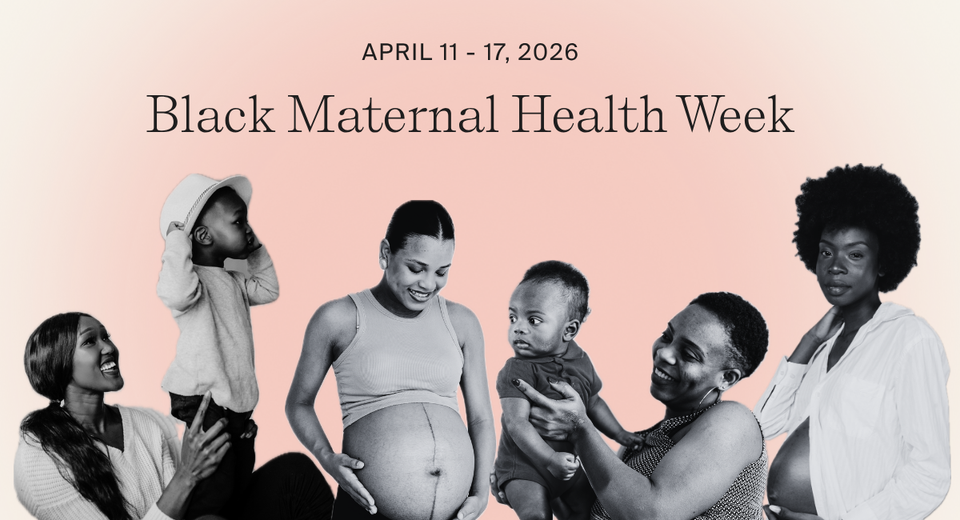
Black Maternal Health Week is a catalyst for investing in and scaling the proven models Black women have led for decades
Black women are 3-4 times more likely than white women to die from pregnancy-related causes, despite 80% of those deaths being preventable – but you’ve probably already heard the alarming and disheartening statistics. The conversation around Black maternal health is often centered on disparities and risk, rather than the systemic failures behind them or the approaches that are already established to help resolve them.
BMHW 2026: Rooted in Justice & Joy
This year’s Black Maternal Health Week (BMHW) theme, Rooted in Justice & Joy, invites a shift: away from framing Black women as a “problem to be solved” and towards solutions that already exist within communities – evidence-based models that define what quality care looks like, prioritize whole-person care, and ultimately deliver better outcomes for moms.
In maternal health care, justice & joy are about what Black women envision for their own health and futures. And of course, it’s far more than simply surviving childbirth. It’s being heard and cared for when telling your provider you’re in labor, it’s feeling empowered in birth and choosing your experience without coercion, it’s having information and support to know what to do when you’re home from the hospital and your baby won’t latch. Whole-person care that prioritizes not just clinical outcomes but also emotional and social well-being isn’t just an ideal – evidence supports these models, and they are already being practiced.
The evidence is already there - Amplifying care models that serve Black mothers
Over decades, Black women have been building and refining solutions that actually work. Features of these models with demonstrated success in improving outcomes for Black mothers include midwifery-led care, community-based support, and doula integration grounded in continuity, trust, and cultural alignment.
Many practices now considered best-in-class in maternal care have long been led by Black birthworkers. Continuous support during labor is associated with shorter labors, fewer interventions, and higher birth satisfaction, while community-based care models are linked to lower rates of preterm birth, increased breastfeeding initiation, and stronger connection to care. Models like Melanated Group Midwifery Care and Beloved Black Birth Centering bring these approaches together - offering a clear, evidence-based vision of what high-quality maternal care looks like when it is designed with and for the communities it serves.
Care informed by shared experience and identity that emphasizes birth and pregnancy experiences, not just clinical outcomes, is a big part of the solution - but it needs to be funded, integrated into mainstream systems, and addressed via policy and legislation to see the biggest impact.
No matter your connection to pregnancy, there are actions small and large you can take to move the system in this direction.
Getting involved - How you can help this BMHW
Statistics help point us to the problem, identifying where we’re falling short and urgently need change, but they can’t define the solution on their own. Understanding the lived experiences behind the data is what drives us toward care that supports Black women in not just surviving, but thriving, and there's a lot we can all do to support what we know works.
Pregnant women can help shift the standard by sharing their own experience. Share and elevate the doctors, doulas, and midwives who showed up for you. Leave the reviews. Make the recommendations. The way better care gets normalized is through the people who experienced it.
Providers and birth workers can engage directly with community-based care models: not just as reference points, but as peers and partners. Many of the practices now considered best-in-class originated in Black-led community care. Seek out those partnerships, advocate for reimbursement structures that support them, and bring those approaches into your own practice.
Investors and healthcare leaders can invest in Black-led, evidence-based, and community-tested maternal health solutions. Doing so isn’t just equity-driven, it’s a pathway to better outcomes and more effective care delivery.
All of us can take action this Black Maternal Health Week: support Black birth workers directly, advocate for expanded access to doula and midwifery care, invest in community-based solutions, and amplify the models already working.
We already know what models and approaches improve health outcomes for Black moms. This BMHW, we’re working to drive the collective action needed to amplify those solutions and reverse the preventable trends that are reflected in today’s data.
At Zenith, this is exactly what drives the Pregnancy Evidence Project: closing the evidence gap in maternal health requires data that actually reflects who's giving birth.
Too much of what we know about pregnancy comes from studies where Black mothers are underrepresented or not represented at all, which means the gaps in care and the gaps in research reinforce each other.
The Pregnancy Evidence Project is designed to capture the real-world experiences of pregnant people at scale – so that "we don't know yet" or “we don’t know why” becomes an answer we can actually change. Learn more here.


