
Acupuncture, eating for two, and new genetic clues to HG
Welcome to the weekly ZIP - your Zenith Informed Pregnancy!
Read on for a quick zip through 3 of the week’s most popular pregnancy questions, and the evidence behind them. Plus - bonus content on the latest & greatest in the world of pregnancy research.
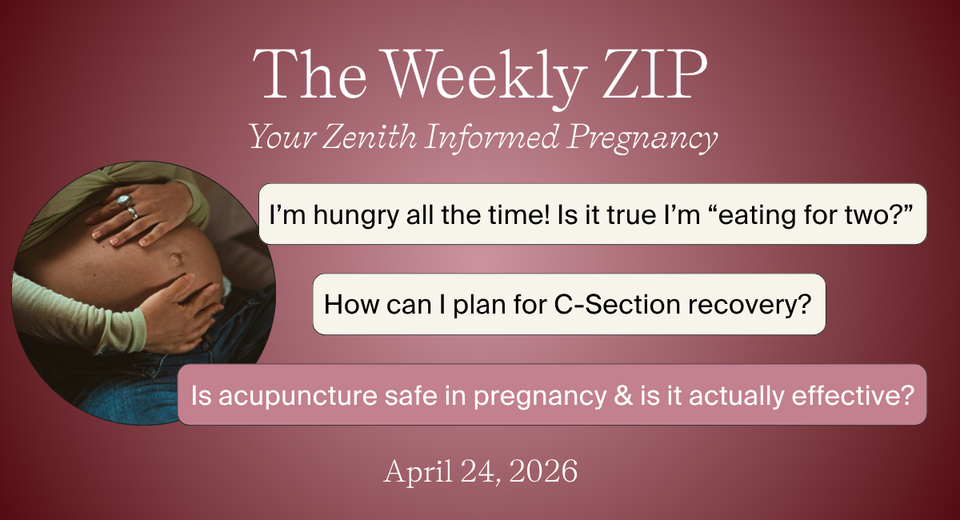
This week's top pregnancy questions:
1️⃣ I’m already starving all the time in early pregnancy. Is it true I should be “eating for two?”
2️⃣ How should I plan for C-Section recovery?
3️⃣ Is acupuncture safe during pregnancy, and is it actually effective for symptoms?
I’m already starving all the time in early pregnancy. Is it true I should be “eating for two?”
The “eating for two” comment gets a lot of airtime despite dubious support from the scientific evidence on how many extra calories are actually required in a healthy pregnancy. But why, then, can hunger hit so hard - as early as the first trimester?
📚The tl;dr from the evidence: Calorie needs in the first trimester are actually minimally different from before pregnancy, and most guidance suggests little to no additional calories are needed above your pre-pregnancy baseline until later on in the second and third trimesters. So why all the hunger? It’s not that there are increased energy needs from the fetus, but early hormone shifts can actually affect how your brain regulates hunger, and increase appetite. This can be compounded if you’re eating less or going longer between meals as a result of nausea or vomiting (very common in the first trimester), as low blood sugar can trigger hunger as well.
Depending on your starting point and activity level, the average increase in caloric needs can ramp to about ~350 extra calories/day in the second trimester, and ~450 extra calories/day by the third – so the “eating for two” line is a bit misleading based on the science – you don’t need to be doubling portions at every meal to make sure your baby is getting the nutrients and calories needed.
More important than a strict calorie count? The quality and composition of what you're eating, and following hunger cues appropriately. Protein, healthy fats, and complex carbohydrates help stabilize blood sugar and keep hunger at bay, while ensuring your developing baby is getting the energy needed to grow.
👀 Read Penny’s full summary of the evidence for more on pregnancy hunger & calorie needs
How should I plan for C-Section recovery?
C-sections account for one of the most common major surgeries in the U.S. (and represent ~1 in 3 births), yet so many women feel underprepared or confused about what recovery can and should look like. Whether planned or unexpected, knowing what you might expect following a C-section can make a real difference in your recovery experience – so here’s what to know.
📚The tl;dr from the evidence: C-sections, while common, are a major abdominal surgery: recovery typically involves a hospital stay of 2-4 days following delivery, with full recovery taking 6-8+ weeks on average. The main buckets you’ll want to plan for are pain control, incision care, and movement/activity.
Pain management (usually a combination of scheduled NSAIDs and/or acetaminophen, with opioids used as needed) is an important part of early recovery. It’s important to keep an eye on your incision for any signs of early infection - warmth, swelling, increasing redness, increasing pain at the incision, pus/drainage/foul-smelling discharge or fever can all signal infection and should be assessed by your doctor immediately for treatment. Other more urgent symptoms to watch out for unrelated to infection are heavy bleeding (soaking a pad in less than an hour), or symptoms of a blood clot, which can be more prevalent with C-section delivery (leg swelling/pain on one side, shortness of breath, or chest pain). If you experience either, it’s important to seek care right away.
Early, gentle movement is often a focus of C-section recovery programs - walking can actually support overall recovery and function, and many guidelines support very light physical activity (getting up and walking a bit) at about 48 hours. Over the first ~6 weeks, you can typically gradually increase movement and activity using comfort as a guide, with higher impact/intensity exercise (like jumping, running) typically advised to wait until closer to 6-12 weeks to resume. However, pelvic floor and core recovery can continue well beyond the standard 6-week postpartum checkin, so try to give yourself and your body grace if you’re not feeling “back to normal” by 6-8 weeks postpartum.
Practically speaking, it can be a good idea to set up a recovery space at home before delivery with easy-to-reach supplies, and a comfortable location with a supportive pillow for movement and breastfeeding if you’re planning on nursing your baby. Planning support for things like meals, laundry, errands, and chores involving lifting for those first few weeks can also make a huge difference, as soreness and limited movement are normal and common. Having solid support lined up at home for those first few weeks isn't a luxury, it’s an important part of your care plan to ensure your body can recover properly.
👀 Read Penny’s full summary of the evidence for more on C-section recovery
Is acupuncture safe during pregnancy, and is it actually effective for symptoms?
Acupuncture has its proponents and its critics - and some moms swear by it for things like morning sickness or pain relief, whether they’re aiming to avoid medications during pregnancy or as a last resort when other options aren’t making a difference. With the mixed anecdotal reviews, what does the evidence show about safety and efficacy?
📚The tl;dr from the evidence: When done by a properly-trained practitioner, acupuncture is generally considered safe. The research on benefit is mixed: some data suggests that acupuncture can reduce symptoms, but the quality of studies is overall not very high and the risk of bias can vary, meaning that it’s hard to draw any strong conclusions about whether it’s actually effective. Think about it: it’s challenging to get quality research – the gold standard for demonstrating efficacy is a randomized, controlled trial, where participants don’t know if they’re getting the treatment (acupuncture) or a placebo – it’s pretty challenging to design a study and convincingly administer ‘placebo’ acupuncture to compare the treatment vs no treatment groups!
That said, the data on effectiveness is most promising for a few specific symptoms: nausea and vomiting, lower back and pelvic pain, and headaches. Research reviews that look at multiple pregnancy symptoms together (like nausea + pain / mood / sleep) have found that acupuncture can perform better than sham (the “control” group), but many of the underlying trials are of mixed/low quality, so the evidence is not considered to be strong.
It's a low-risk option for symptom relief that some women find helpful and worthwhile, so it’s worth discussing with your provider if you're curious and want to try, but the evidence doesn't currently support it as a replacement for standard care.
👀 Read Penny’s full summary of the evidence for more on acupuncture
🤓 Zenith's top read of the week
Bonus: what the Zenith team found interesting this week. Think cool pregnancy research or recently published studies, news in pregnancy health and policy, and more!
Largest study of pregnancy sickness uncovers six new genetic links (Keck School of Medicine of USC) - Anyone who has experienced hyperemesis gravidarum (or knows someone who has), will be thrilled to hear about this groundbreaking new research that was just published and identified six new genes (adding to the four already identified in prior research) linked to the debilitating condition. This is a super cool study design: a genome-wide association study (GWAS), which essentially means researchers scanned the entire genome to look for differences between women with HG and women without it.
Hyperemesis gravidarum (HG) is severe nausea and vomiting of pregnancy, and goes far beyond “normal morning sickness” in severity. As of right now, treatments and care options for moms with HG are thin - even Zofran, which is often prescribed and considered to be one of the most effective treatments, only partially relieves symptoms in only ~50% of patients. So any research on new targets for treatments, and better understanding why HG happens, is hugely exciting news for pregnancy care. Congratulations to Dr. Marlena Fejzo and the research team - hopefully lots more to come on the back of these new findings!
Key excerpt:
“The researchers identified 10 genes linked to HG—four previously identified and six new. The strongest link by far was to growth differentiation factor 15 (GDF15), a gene that produces a hormone of the same name, which rises sharply during pregnancy…. The other genes identified relate to key pregnancy hormones, appetite and nausea, insulin and metabolism, how the brain learns and adapts, and certain pregnancy outcomes.
“Now that we’ve more than doubled the genes associated with HG, we can dig deeper into the biology behind this condition, as well as new possible pathways for treating it,” [Dr. Marlena] Fejzo said.”


