
Sweating, energy drinks, and advanced maternal age
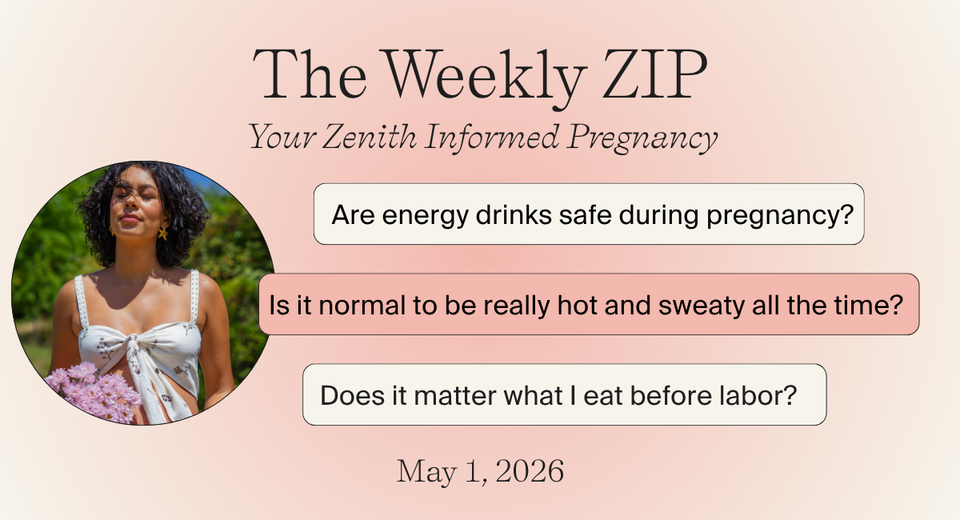
Welcome to the weekly ZIP - your Zenith Informed Pregnancy!
Read on for a quick zip through 3 of the week’s most popular pregnancy questions, and the evidence behind them. Plus - bonus content on the latest & greatest in the world of pregnancy research.
This week's top pregnancy questions:
1️⃣ Are energy drinks safe during pregnancy?
2️⃣ Is it normal to be constantly overheated and sweat more than usual?
3️⃣ Does it matter what I eat before labor, and does it depend on my birth plan?
Are energy drinks safe during pregnancy?
Being tired all the time is a hallmark of pregnancy, and with newer brands like Celsius that are popping up everywhere, to the longstanding options like Red Bull, energy drinks are often asked about. But how well have they been studied in pregnancy, and what does the data say about safety?
📚The tl;dr from the evidence: There isn’t a strong body of evidence on energy drinks during pregnancy – intake hasn’t been clearly linked with adverse outcomes like pregnancy loss, preterm birth, or other pregnancy complications, but pregnancy-specific exposure data is fairly limited. In one cohort study, energy drinks before pregnancy were linked with a higher risk of gestational hypertension, aka high blood pressure that starts during pregnancy. This suggests more caution during pregnancy if you have existing blood pressure concerns or risk factors, and is worth running by your provider.
The caffeine in energy drinks is the most well-studied aspect of these drinks, and the 200mg/day guideline applies here. Many popular drinks push close to or past that 200mg caffeine level in a single serving, and caffeine levels can vary a lot per serving/per can, so it’s worth looking at the label to see how much is in the drink and considering that alongside any other sources of daily caffeine intake.
What's less studied in pregnancy are the other ingredients in these drinks. Ingredients like taurine, guarana, ginseng, and other herbal stimulants are classified as supplements by the FDA, meaning they haven't been subject to rigorous pregnancy safety testing. Products with multiple added stimulants are harder to evaluate, and combined effects aren’t always predictable. The lowest-risk options, if you’re comparing options, are the drinks with lower total caffeine content and fewer additional added stimulants.
👀 Read Penny’s full summary of the evidence for more on energy drinks
Is it normal to be constantly overheated and sweat more than usual?
It’s getting warmer out, but even beyond the spring weather, many moms ask whether or not it’s normal to run hotter during pregnancy than normal. If you feel like your internal thermostat is broken, you're not imagining it and you're not alone – here’s the evidence behind body temperature regulation during pregnancy.
📚The tl;dr from the evidence: Running hot and sweating more than normal is a well-documented and physiologically expected part of pregnancy. Yes, hormones are partially to blame here– hormone changes can change/raise the set point that you feel warm at, and pregnancy also increases heat production (higher metabolism). This means changes to how your body cools itself – your body's blood volume expands significantly during pregnancy, and your skin blood flow increases to help dissipate heat – which leads to running warm and sweating more, even at rest. Your sweating threshold can also actually lower as pregnancy progresses, meaning your body starts trying to cool itself off earlier than it used to pre-pregnancy.
This is largely a protective adaptation to prevent dangerous rises in core temperature for you and your developing baby. It also means that staying hydrated can matter more, if you're losing more fluid via sweat than you normally would. If you’re experiencing extreme or persistent overheating (particularly in hot environments or alongside signs of heat illness like dizziness, severe headache, or fainting), it’s worth monitoring closely and contacting your provider, as the evidence cautions away from prolonged/sustained heat exposures that raise your core temperature – like spending time in a sauna or hot tub. Additionally, true fever (temperature over 100.4°F) is worth talking to your doctor and treating appropriately.
👀 Read Penny’s full summary of the evidence for more on pregnancy sweating
Does it matter what I eat before labor, and does it depend on my birth plan?
Part of planning for labor and birth often entails trying to figure out what you want to eat, when you’ll eat it, and how to time it just right. Hospitals can have all sorts of rules and policies about eating during labor, what’s allowed and what’s suggested, but are these policies supported by evidence, and what does it mean for you based on your intended birth plan?
📚The tl;dr from the evidence: The primary consideration for eating before labor is whether you’ll have a vaginal birth or C-section, as the main thing to avoid is having a full stomach under a C-section requiring general anesthesia. This is due to the (low/uncommon) chance of potential aspiration risk under anesthesia, where stomach contents can get into your airways – modern anesthesia has lowered this risk a lot, but it’s still non-zero. As a result, many guidelines and hospitals will advise avoiding solid food once active labor has begun, to minimize risk in the case of an emergency c-section requiring anesthesia.
Before beginning labor, a light, easily digestible meal (lower fat / lower fiber foods are often recommended) is advised for your own comfort/energy levels during birth. For low-risk pregnancies with vaginal birth plans, ACOG supports clear liquids (water, juice without pulp, sports or electrolyte drinks) during labor, but still formally guides against solid foods during active labor. There have also been research trials allowing for food during labor, which haven’t shown worse birth outcomes – these results are promising, but haven’t yet changed ACOG or many hospital guidelines.
If you're planning a hospital birth, including a scheduled induction or elective c-section, it's worth asking your provider about their specific policy in advance, since practices can still vary.
👀 Read Penny’s full summary of the evidence for more on eating before birth
🤓 Zenith's top read of the week
Bonus: what the Zenith team found interesting this week. Think cool pregnancy research or recently published studies, news in pregnancy health and policy, and more!
Contribution of Comorbidities and Pregnancy Complications to Severe Maternal Morbidity in the United States (Tetsuya Kawakita, et al., Obstetrics & Gynecology) - This new paper looks at over 25 million deliveries over a 6 year period in the US, seeking to understand what is actually driving the unfortunate increasing trend of severe maternal morbidity (SMM - which refers to life-threatening complications during labor & delivery that can result in long-term health consequences or even death). Advanced maternal age (35+ at delivery) has repeatedly been associated with SMM, but these researchers looked at additional health factors like obesity, pregestational / gestational diabetes, chronic hypertension, and hypertensive disorders of pregnancy (HDP).
Every risk factor studied independently increased the odds of serious complications – but hypertensive disorders of pregnancy accounted for nearly a third (32.4%) of the entire increase in severe complications, the largest share they identified, whereas advanced maternal age explained just 3.8% of the increase. This finding shows the need for a more tailored approach to care than simply looking at a mother’s age – and highlights the importance of proactive monitoring and care for hypertensive disorders of pregnancy.
Key excerpt:
“Although maternal age, particularly advanced maternal age, has repeatedly been shown to be associated with [severe maternal mortality], it is unlikely to be the sole driver of the rising national trend. The proportion of births to individuals aged 35 years or older has doubled since 1990, now accounting for roughly one in five deliveries. However, this demographic shift has occurred alongside the rising prevalence of other maternal risk factors."


