
What No One Tells You About Postpartum Anxiety
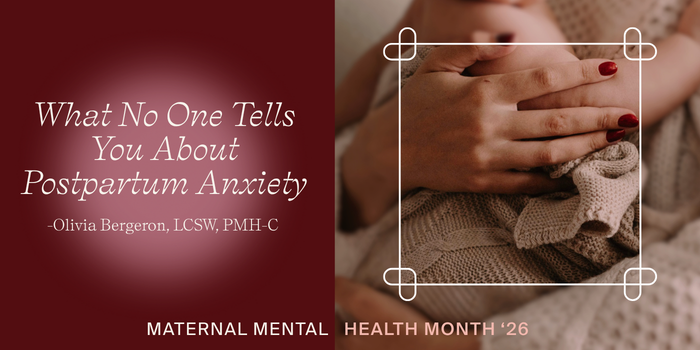
It doesn't always look like worry.
This month (May) is Maternal Mental Health Month, which provides an opportunity for us to ask moms a question we don’t pose often enough: how are you really doing?
We ask about the baby. We coo over the tiny onesies and offer teddy bears galore. We rarely take the time to ask moms how they are truly doing. Nor do we signal we’re open to hearing a response beyond the bland, “I’m fine.”
Today, we’re going to talk about one of the most common and least understood aspects of mental health for new moms: postpartum anxiety. In particular, we’ll discuss how it doesn’t look or show up as we expect. This gap in understanding leaves too many moms struggling with feeling “off” without a way to name the experience and without the support they need.
What Postpartum Anxiety Actually Looks Like
Many people have heard of postpartum depression, but far fewer are familiar with the just as common postpartum anxiety and what it looks like in real life. Perhaps postpartum anxiety conjures images of new moms pacing their apartment, hovering over the crib, wracked with images of something terrible befalling their infant. This presentation definitely exists, but it is not the whole picture by far.
Postpartum anxiety is a shape-shifter. For many mothers, it shows up as:
Rage and irritability. Anger is an unexpected and unwelcome companion for many postpartum moms. Usually, under the anger is sadness or fear, both of which are unacceptably passive for some moms, so instead, they become enraged. Now they feel powerful and back in charge, though they are burning down the very relationships needed to get through this time in the process. This one gets misread constantly, by mothers and providers alike.
Physical symptoms. Many anxious moms experience headaches, chest tightening, a racing heart for no obvious reason, GI symptoms and muscle tension. Difficulty sleeping is also a hallmark symptom for moms who can’t turn off the onslaught of upsetting thoughts and images, to do lists or “what if” spirals. The body is in a heightened state of alarm response, even though there is no immediate threat.
Hypervigilance that masquerades as good mothering. She’s reading all the labels to screen toxic ingredients. She’s researching, weighing pros and cons, being thorough and prepared. And she’s exhausted. It’s not always easy to recognize the extreme effort to parent perfectly as anxiety, but it is a very common symptom.
Intrusive thoughts. Disturbing images of dropping the baby play out like an unwanted movie. Thoughts of terrible things happening to loved ones pop into her head unbidden. These are so upsetting and stigmatizing, that moms carry them in silence, convinced that something must be very wrong, but fearful of letting anyone else know. Being disturbed by these thoughts is actually evidence that this is a symptom of perinatal anxiety. Finding those images upsetting is a signal to get help from a professional trained in helping perinatal clients who will understand that this is nothing she wants to happen.
The high-functioning presentation. Extremely high functioning parents –those who are excelling at work, at home, with their relationships– despite the intensive demands of new parenting, are often drowning though they slide under the radar. Because she is functioning and the demands on her are met, she doesn’t raise alarms. Her intense effort to stay afloat and the cost it exacts are missed because she looks “fine.”
What This Means — and What Can Help
If any of this resonates — for yourself or for someone you care about — the most important thing to know is this: postpartum anxiety is common, it is real, and it responds well to support.
The first step is recognizing it. And that recognition may look different than expected, and require a provider who is genuinely trained to see it.
Integrated support matters here. Because postpartum anxiety lives in the body as much as the mind, the most effective approaches tend to combine more than one lens — therapy that addresses thought patterns and emotional processing, nervous system-informed work that helps the body come back to baseline, and when appropriate, medical evaluation to understand the full hormonal and physiological picture.
You don't have to be falling apart to deserve care. You don't have to have a newborn. You don't have to fit the image of what postpartum is "supposed" to look like.
This May, We're Asking: How Is She, Really?
Maternal Mental Health Month isn't just a hashtag. It's an invitation — to check in more honestly, to screen more thoroughly, to listen past the "I'm fine."
Support is available for mothers across the full arc of the postpartum experience, not just the first few weeks.
If you're not sure what you're feeling, or you've been feeling it for longer than you think you should be — that's exactly the kind of conversation we're here to have.
Looking for perinatal mental health support? Email Olivia@mommygroove.com or visit MommyGroove.com to book a consultation.
And for all those pesky pregnancy questions - Penny is here for you with unbiased, research-backed information at any time of the day or night.


